+38 (098) 127 45 85
 +38 (050) 673 51 21
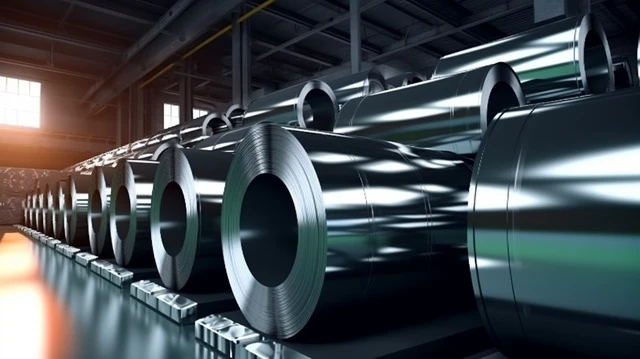
Raw Materials for Steel: Composition, Challenges, and Importance
Steelmaking is a complex process that starts with raw materials, and they shape the efficiency, environmental impact and cost of production.
According to the World Steel Association, the main inputs are iron ore, coking coal, limestone and scrap.
This article looks at:
which materials are used;
how much of each is needed to make steel;
the main challenges: environmental, logistical and resource-related;
why they matter for metallurgy and metalworking.
1. The main raw materials and how much is used
Iron ore
Making 1,000 kg of crude steel via the BF/BOF route takes about 1,370 kg of ore.
Top producers: Australia, Brazil, India, China, the United States and Russia.
Global reserves exceed 800 billion tonnes of crude ore, containing more than 230 billion tonnes of iron.
Coking coal and coke
The main energy source and the reducing agent for ore in blast furnaces.
Around 1 billion tonnes of metallurgical coal are used every year, about 15% of global coal consumption.
Scrap
A valuable secondary raw material: steel recycles easily because of its magnetic properties.
In EAF production, scrap can make up to 100% of the charge; in BF/BOF it is about 30%.
Each tonne of scrap avoids roughly 1.5 t of CO₂ and saves 1.4 t of ore, 740 kg of coal and 120 kg of limestone.
2. Production routes in practice
The World Steel Association identifies two main routes:
BF/BOF (integrated): ore, coke, limestone and some scrap.
EAF (electric arc furnace): mainly scrap and DRI, powered by electricity.
Roughly: 710 kg of scrap, 586 kg of ore, 150 kg of coal and 88 kg of limestone make 1,000 kg of steel.
The growing share of EAF technology is the main trend going forward.
3. Key challenges
Shortage of quality scrap
Demand is growing faster than collection volumes.
Impurities such as Cu, Sn and Ni reduce steel quality, so the scrap needs cleaning or DRI additions.
Dependence on supply and logistics
Major ore and coal deposits are concentrated in a few countries, which creates geopolitical risk.
The answer is supplier diversification and adapting production technology.
Environmental and energy aspects
Traditional BF/BOF routes have a high carbon footprint and fall under CBAM regulation.
Moving to EAF models requires investment in modernisation and innovation.
4. Why it matters for metallurgy and metalworking
Understanding the cost structure (ore, scrap, coal) helps with budgeting and logistics planning.
The quality of steel depends directly on the supplier's raw material base.
Scrap recycling is a competitive advantage: lower costs, lower emissions and a stronger brand.
Raw materials are the foundation of steel production. A larger share of recycling, quality control and sustainable mining are key to the industry's development.
Source:
World Steel Association — “Raw materials – Introduction, Iron ore, Coal and coke, Scrap, Steelmaking materials markets” (worldsteel.org)
- Share
-

-

-

-

-

-