+38 (098) 127 45 85
 +38 (050) 673 51 21
CNC MACHINING CENTERS
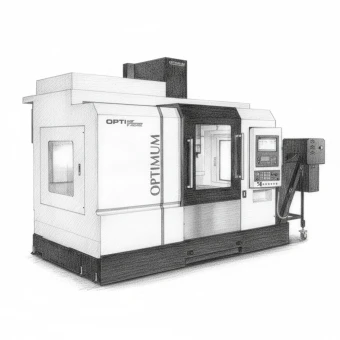
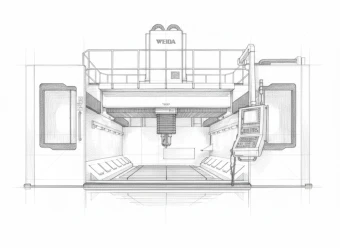
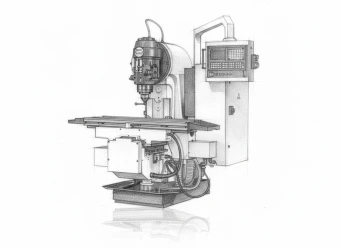
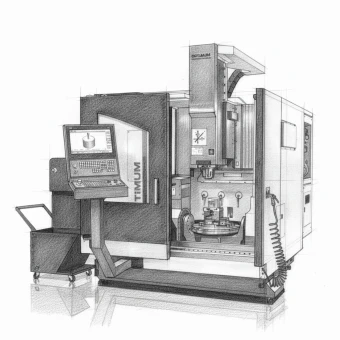
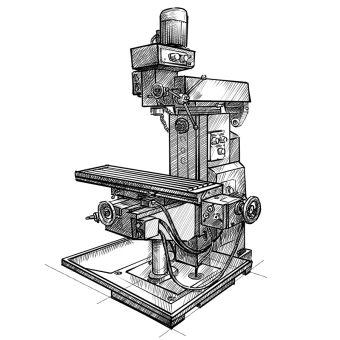
CNC milling centers are metalworking machines designed for automated milling, drilling, boring and other machining operations performed according to a CNC program. Machining centers are used for housings, plates, moulds, dies, machine components and other parts requiring repeatable production.
The KVERB range includes vertical, horizontal, gantry and 5-axis CNC milling centers for different manufacturing requirements.
How to choose a CNC milling center?
Selection starts with workpiece dimensions and weight, X/Y/Z travels, table size and allowable table load.
Machine capability is also influenced by spindle power, speed and torque, spindle taper and tool magazine capacity. For production machining, CNC control, automatic tool change, coolant systems and chip evacuation should also be considered.
Main types
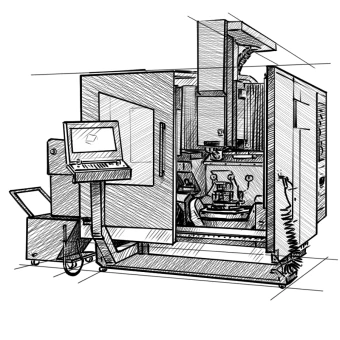
Vertical machining centers use a vertically oriented spindle and are suitable for a wide range of general machining and toolmaking operations.
Horizontal machining centers use a horizontal spindle and can provide convenient access to several sides of a workpiece during multi-operation machining.
Gantry machining centers are designed for large and heavy components such as plates, frames and structural parts.
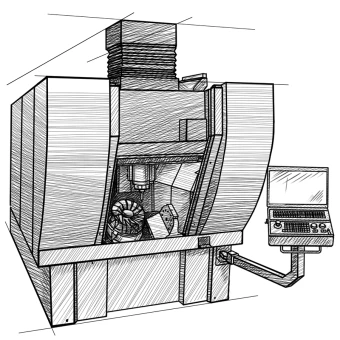
5-axis machining centers provide controlled movement on five axes, making them suitable for complex geometries and multi-sided machining in fewer setups.
Applications
CNC milling centers are used in mechanical engineering, mould and die manufacturing, automotive, aerospace and general metalworking.
Depending on machine specifications, they can process steel, stainless steel, cast iron, aluminium and other engineering materials.
Buy a CNC milling center in Ukraine
KVERB has worked with Ukrainian metalworking companies for more than ten years and assists with selecting machining equipment according to actual production requirements.
The company supplies both new and used CNC milling centers, allowing equipment to be selected according to technical requirements, budget and delivery time.
When selecting a milling center, workpiece dimensions, travel range, spindle type, tool capacity, CNC control and the specific production process are taken into account. KVERB organises equipment supply across Ukraine and provides technical consultation and ongoing support.
Frequently asked questions
When is a 5-axis machining center preferable to a 3-axis machine?
It is useful for complex geometries and parts that would otherwise require several separate setups.
What do spindle taper standards such as BT40, BT50 and HSK mean?
They define the interface between the spindle and tool holder and therefore affect tooling compatibility.
How many tool positions are needed in the magazine?
This depends on the number of tools required by typical programs and how often the machine changes between different jobs.
Why is through-spindle coolant useful?
It delivers coolant through the tool directly to the cutting zone and can be beneficial for deep-hole drilling and selected milling operations.
Can existing machining programs be transferred to another milling center?
Often yes, but they may need to be adapted to the CNC control and configuration of the new machine.