+38 (098) 127 45 85
 +38 (050) 673 51 21
PRESSES
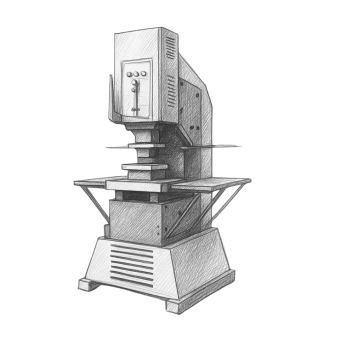
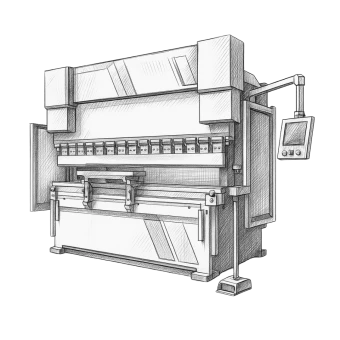
Industrial presses are used for bending, forming, straightening and other operations that require controlled mechanical or hydraulic force to be applied to a workpiece. Machine design varies according to the process, material and type of part being produced.
The KVERB catalogue includes press brakes and general-purpose presses. CNC and semi-automatic press brakes are available as separate equipment categories.
How to choose an industrial press?
For a press brake, key parameters include bending length, material grade and thickness, part geometry, required controlled axes and tooling system.
For other pressing operations, working force, stroke, available working area, drive system and the required operation should be considered.
If a machine is required for a specific component, KVERB can use a drawing or basic part dimensions to determine suitable equipment parameters.
Main types of presses
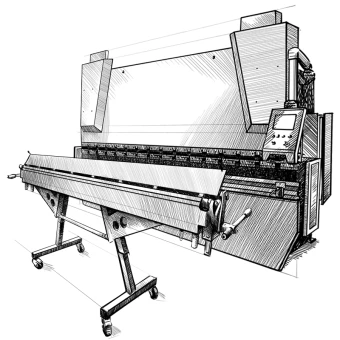
Press brakes form straight bends by pressing sheet metal between a punch and die. They are used to manufacture enclosures, panels, cabinets, covers, structural components and other sheet metal parts.
CNC press brakes provide programmable control of bending operations and are suited to parts requiring multiple bends. Machine capabilities depend on the control system, number of axes, back gauge configuration and tooling.
Semi-automatic presses automate selected stages of the working cycle while the operator remains involved in setup, positioning or cycle control depending on the machine design.
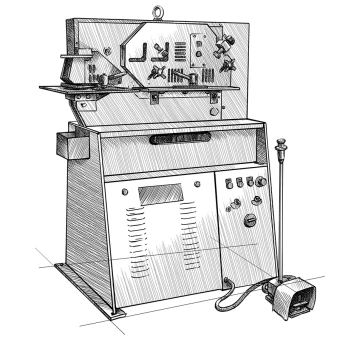
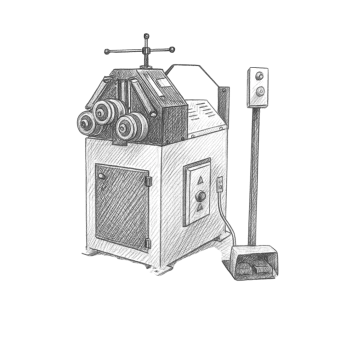
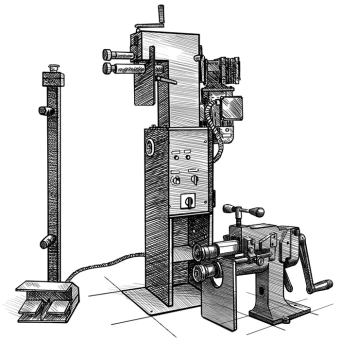
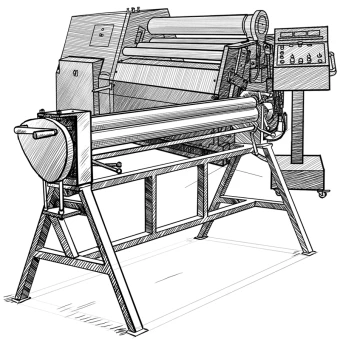
General-purpose presses include hydraulic, screw, crank, roller and other press designs. The correct configuration depends on the required operation, force and workpiece.
Typical applications
Depending on their design, industrial presses can be used for:
sheet metal bending;
enclosure and panel production;
forming operations;
part straightening;
press fitting and removal;
structural metal fabrication;
programmed batch production;
workshop and maintenance operations.
Materials processed on presses
Industrial presses can be used with carbon steel, stainless steel, aluminium and other metals. Actual capacity depends on material properties, thickness, working force, bending length and tooling.
Different materials may require different machine settings even when the finished part has the same geometry.
Press manufacturers
Baykal supplies industrial sheet metal processing equipment, including press brakes.
ISITAN offers metalworking equipment for bending and forming applications.
NARGESA produces presses and other industrial machines for metalworking operations.
SAY-MAK offers metal forming and bending equipment in configurations for different production requirements.
Buy industrial presses in Ukraine
KVERB supplies presses for new production lines, replacement of existing machinery and applications where equipment must be selected for a specific part.
We offer:
press brakes and general-purpose industrial presses;
CNC and semi-automatic models;
machine selection based on part drawings;
assistance with press force and working length selection;
supply across Ukraine;
technical support and configuration assistance.
Press price depends on machine type, working force, working area, control system, number of axes and equipment configuration.
Frequently asked questions
We have a part drawing but do not know what press force is required. Can the machine be selected from the drawing?
Yes. Material grade, sheet thickness, bend length, part geometry and tooling information can be used to determine the required machine class.
Can we use our existing punches and dies on a new press brake?
Possibly. The tooling standard, dimensions and clamping system must first be checked for compatibility with the new machine.
What should we consider if one part requires many different bends?
The control system, back gauge and tooling configuration need to be evaluated together. A part drawing can be used to check whether the required bending sequence can be completed on the selected machine.
Can a press be ordered with non-standard specifications?
This depends on the manufacturer and model. Optional equipment and alternative configurations may be available for machines supplied to order.
Does an operator need training for a CNC press brake?
Training is recommended when using a new control system or operating CNC bending equipment for the first time. The scope of commissioning and operator training depends on the selected machine and supply conditions.